
'Our policy seems to be to give away part of J&K, even though we are entitled to the entire state.' 'The Congress has done so, and the BJP is following the same policy.' 'No one is applying their mind to the legal position.' 'Kashmir is not a part of Pakistan under its own constitution.'
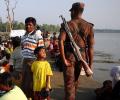
Resettlement of refugees elsewhere is not the morally correct solution to the problem for it lets the perpetrators off the hook.

MUST READ: The speech Nayantara Sahgal was not allowed to give.

Mohammad Sajjad profiles Professor Riazur Rahman Sherwani, 94, versatile mind, intrepid intellectual.

Opposition parties ask the government to listen to the concern of the intellectuals returning awards.
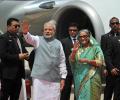
'When we have a terrorist outfit in a neighbouring nation, we need to do whatever we can to neutralise that threat,' says Ramananda Sengupta.
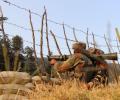
'India has to understand that the permanent state of war that exists between India and Pakistan has to be expected,,' says Colonel Anil A Athale (retd). 'The only way to ensure peace or absence of war is to maintain a militarily-dominant position over Pakistan.'

On the occasion of the first prime minister Jawaharlal Nehru's 125th birth anniversary, Sheela Bhatt/Rediff.com visits his residence of 16 years, and comes away marvelling at his enduring legacy.

The BJP has already cobbled up 28 seats to counter-bargain with the PDP's 28 seats in future talks. It is up to the Kashmir-based parties like the National Conference and PDP to assess the damage of going with the BJP which is perceived as the 'Hindu' party in the state. Sheela Bhatt/Rediff.com's takeways from a historic but fractured mandate in Jammu and Kashmir.

'Muslims are depressed and disillusioned.' 'The safety valve is that we still have a multicultural mosaic in West Bengal, Tamil Nadu, Karnataka and Kerala.'

The curative petition and other legal remedies still available to Yakub Memon are part of his rights as a prisoner condemned to death. Does the Maharashtra government want to deprive him of these rights, asks Jyoti Punwani.

'This is India, bhai. This kind of country does not exist anywhere in the world.'
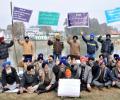
APSCC Chairman Jagmohan Singh Raina talks about the life and times of the Sikh minority in a politically tumultuous region of Jammu & Kashmir.
The 1965 war teaches us that war by escalation is a real possibility. Despite clear threats, Pakistan never believed that India will ever cross the international border. In the age of nuclear deterrence, this failure to deter Pakistan is the central lesson of 1965, says Colonel Anil Athale (retd).

How to deal with a country that has made export of terror a reason to make the world notice and fund it? Rediff.com contributor Sanjeev Nayyar offers a few suggestions

'India has always been a land of acceptance of diversity. But if the evangelical activities continue unabated, there is no doubt this will cause a backlash.' 'One exclusive ideology begets another. The hit list will spread. The more strident the evangelists, the more strident the voices for Ghar Wapsi will grow.'

An economist from J&K and a popular face from the RSS/BJP sat together to craftily weave an alliance in what is one of the most difficult agenda-setting exercises in recent history.

It is rare for communal riots to spread to rural areas. The UP riot is the first time after the September 1969 Gujarat riots that a rural area have been affected. Electoral politics which divide society in majority/minority, going on since the early 1990s, is a major contributing factor to this heightened tension between communities, says Colonel (retd) Anil Athale in the first of a two part series.

'We are certainly disappointed by our inability to win a single seat in the valley... We will analyse what led to this kind of dismal -- in terms of seats -- non-performance by the BJP.' 'I certainly don't want to attribute any religious or so-called communal reasons for it; for the simple reason, that even in Ladakh, a Buddhist majority area, we failed to win seats.' BJP General Secretary Ram Madhav, the man in charge of the party's election campaign in J&K, discusses the verdict with Sheela Bhatt/Rediff.com

'If Indian armed forces entered Pakistan and succeeded in inflicting major damage on the Pakistani army and occupied territory in the Pakistani heartland, there is reason to think the Pakistani military would use some nuclear weapons against the incoming Indian forces to compel India to stop.'

'Manto is the only writer to grasp what the project of Pakistan would eventually mean,' says Aakar Patel, who has translated a collection of Saadat Hasan Manto's essays in a just-released book Why I Write.

'Modi, focused on youth and their aspirations, has articulated a truly disruptive change: One of hope, of duties rather than rights, of standing up to the world instead of being bullied by it,' says Rajeev Srinivasan.
On the eve of the release of his book, 2014: The election That Changed India, Rajdeep speaks candidly in an interview with Sheela Bhatt/Rediff.com.
